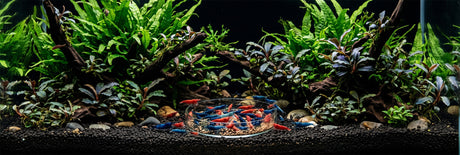
In recent years, one plant genus has taken the hearts of aquarists worldwide by storm: Bucephalandra. What used to be a rare insider tip among collectors is now an indispensable part of any modern aquarium.
But what makes these epiphytic plants so special? Why do they glow in colors from deep blue to metallic violet? In this article, we dive into the world of "Buces" and explain why they are the perfect companions for your shrimp.
Origin: Survivors from Borneo
All Bucephalandra species originate exclusively from the island of Borneo in Indonesia. There, they grow in the tropical rainforests along streams and rivers.
The special thing about their natural habitat: Water levels fluctuate massively. Bucephalandras are rheophytes. This means they are adapted to fast-flowing water and grow both submerged (underwater) and emersed (above the waterline on moist rocks or roots). This enormous adaptability makes them extremely robust and rewarding plants in the aquarium.
Why Bucephalandras Deserve Absolute Highlight Status
There is hardly any other plant that offers such a mystical appearance. The appeal lies in the incredible variety:
- Color Variance: Depending on the species and light intensity, the leaves shimmer dark green, deep red, violet, or even metallic blue. Many species also have tiny light dots on the leaves (stomata), which glitter like fine stardust underwater.
- Growth Forms: From tiny, creeping species like the 'Mini Needle Leaf' to large-leaved varieties like the 'Gigantea', there is something for every tank layout.
- Flowering Beauty: Bucephalandras are known for regularly producing small, white flower spathes even underwater – a sight rarely seen in most other aquarium plants.
Easy to Care for and Undemanding: The Plant for Every Aquarist
Despite their exclusive appearance, Bucephalandras are surprisingly easy to care for. They are slow-growing plants and have similar requirements to Anubias or ferns.
1. Attaching to Hardscape
Bucephalandras should never be buried in the substrate. Their rhizome (the creeping rootstock) would rot in sand or soil. Instead, they are tied to rocks or driftwood or fixed with the ShrimpPuddle Moospad system (for smaller species). After some time, they will attach themselves to the substrate with their clinging roots.
2. Light and Fertilization
Buces can thrive with low light. However, if you want to bring out the maximum colors, moderate lighting and targeted fertilization (iron and micronutrients) are key. Under more intense light, they often develop their characteristic metallic colors even more clearly.
3. Perfect for Shrimp
Bucephalandras are ideal for invertebrates. Since they grow slowly, they continuously consume nutrients from the water without overgrowing the swimming space. Shrimp love to graze on the fine biofilm from the sturdy leaves.
Tips for Buying and Acclimatization
When you buy a new Buce, don't be surprised if it initially loses some leaves. This is completely normal! The plant is transitioning from emersed cultivation (above water) to submerged life in your aquarium (underwater). Once it has adjusted to your water parameters, it will sprout new, often even more colorful leaves.
Conclusion: Little Effort, Maximum Aesthetics
Bucephalandras are the perfect choice for anyone who wants to maintain an aesthetic aquarium without weekly gardening. Their robustness combined with exotic colors makes them the ultimate highlight in any invertebrate tank.