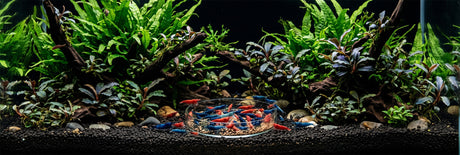
Shrimp are often sold in pet stores as the ultimate "algae cleaners." People put them in the tank and expect them to magically remove tufts of filamentous algae or brush algae overnight. But anyone who observes their animals closely will quickly realize: It's not that simple.
In this article, we clarify why shrimp are not actually classic algae eaters, what they spend all day "plucking" with their small claws instead, and how you can best promote their natural food source.
The subtle difference: Algae vs. Biofilm
It's a common misconception that shrimp consider algae their main food. When we see a shrimp continuously working on an alga-covered leaf, it's usually not eating the algae itself. What it's really eating is the biofilm.
Biofilm is a complex ecosystem of bacteria, microorganisms, fungi, and microalgae that forms on every surface in the aquarium. This film is extremely rich in protein, and that's exactly what the shrimp's digestive system is specialized for.
- The Bycatch: When shrimp pluck biofilm from algae, they sometimes also damage or eat small parts of the algae. This prevents algae from growing extensively or even forming at all – but the algae are more of a "side dish" for them, not the main course.
A look at nature: Survival in streams and rivers
A look at the natural habitats in Southeast Asia (like the home of the popular Caridina or Neocaridina species) confirms this:
- Leaves and wood: In their home streams, there are often no massive algae deposits at all. Instead, there are huge amounts of autumn leaves and deadwood in the water.
- Decomposition processes: These organic materials are colonized by bacteria and fungi that decompose them. This creates a thick, nutritious biofilm.
- Constant grazers: The shrimp move across these surfaces all day long, grazing this microscopic layer. They depend on this film constantly regenerating, as they have a very short digestive tract and must continuously absorb small amounts of energy.
Why "clean" aquariums are dangerous for shrimp
In freshly set up or extremely intensively cleaned aquariums, this vital biofilm is often missing. The stones and roots are "clinically clean." This is why many shrimp in new tanks starve despite being fed – they lack the permanent grazing area between meals.
This is especially critical for baby shrimp: They barely move from the spot in the first few days. If no biofilm grows right in front of their noses, they have no chance.
Actively promoting biofilm: GlasGarten Bacter AE
GlasGarten Bacter AE
This powder contains important microorganisms, amino acids, and enzymes. It activates the formation of a nutritious biofilm on all surfaces.
Since natural biofilm in the closed system of an aquarium often does not regenerate quickly enough (especially with a high stocking density), it makes sense to help it along.
- Extensive growth: As soon as the powder enters the water, it spreads throughout the entire tank and activates the formation of a nutritious biofilm on all surfaces – whether on moss, filters, panes, or the substrate.
- Safety for babies: By adding Bacter AE, you ensure that even the smallest offspring immediately encounter food in every corner of the aquarium.
Conclusion: Shrimp are Biofilm Specialists
Shrimp are not "lawnmowers" that eat meters of algae. They are highly specialized micro-collectors who spend all day grazing valuable biofilm from surfaces. Anyone who understands this and supports the microflora of their tank with products like Bacter AE will be rewarded with agile, colorful animals and a significantly higher survival rate for their offspring.