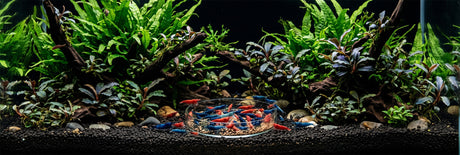
In modern aquaristics, we often strive for clinical purity. However, for shrimp, crayfish, and snails, this is often precisely the problem. In their natural habitats, they live in waters rich in organic decomposition processes. The humic substances formed in these processes are much more than just a coloring agent for the water: they are the biological insurance for your invertebrate tank.
Why invertebrates suffer without humic substances
Invertebrates such as Neocaridina or Caridina shrimp are in direct exchange with their environment. Since they constantly absorb substances from the water through their gills and carapace, water quality is crucial. Humic substances, especially humic acids and fulvic acids, provide protection here.
1. Supporting molting
Molting is the most dangerous moment in a shrimp's life. Humic substances support this process on two levels:
- Metabolism boost: They promote mineral transport in the body, which facilitates the formation of a stable new carapace.
- Infection protection: Immediately after molting, the new skin is soft and extremely susceptible to germs. Humic substances help reduce the risk of bacterial problems.
2. Natural germ reduction
Many mysterious deaths in shrimp are due to a high germ density. Humic substances have antibacterial and fungicidal properties. They suppress problematic bacterial strains without burdening beneficial filter bacteria to the same extent. This creates a healthier balance in the aquarium.
3. Vitality and breeding promotion
Breeders know: In water with a slight humic substance content, the survival rate of juvenile shrimp is often significantly higher. Humic substances protect eggs from fungal growth and promote the formation of a healthy biofilm that baby shrimp and snails graze on as first food.
Liquid humic substances vs. natural materials
| Feature | Liquid Humic Substances | Natural Materials |
|---|---|---|
| Dosage | Precise and easily controllable | More difficult to calculate |
| Onset of action | Immediately after addition | Delayed over days |
| Additional benefits | No additional organic load | Grazing area and hiding places |
| Appearance | Water often remains clearer | Very natural look |
Humic substances as pollutant filters
An often underestimated advantage in invertebrate keeping is the ability to form chelates. Humic substances bind heavy metals such as copper or lead present in tap water. Since invertebrates react sensitively even to the smallest amounts of copper, humic substances act here as additional security between tap water and the animal stock.
Pro tip: Combine natural materials such as catappa leaves or alder cones with a liquid humic substance preparation after a water change. This combines natural long-term effects with targeted re-dosing.
Conclusion
Anyone who wants not only to keep but also to maintain or successfully breed shrimp, crayfish, or snails in the long term should firmly plan humic substances into their tank care. They bridge the gap between the artificial aquarium world and the natural habitat.