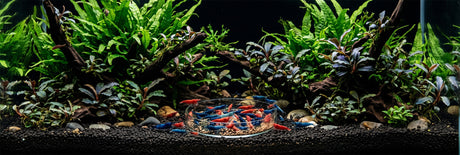
If you ask three aquarists about the ideal water change, you'll often get four different answers. The range goes from weekly 50% changes to the so-called "old water aquarium," which requires almost no fresh water supply.
But what's right for your tank? In this article, we'll explain why water changes are an extremely individual topic and how you can make them as stress-free as possible.
Why do we even do water changes?
Before we talk about the quantity, we need to understand what happens in the water. An aquarium is a closed system. Over time, substances accumulate that are not completely broken down by plants or filter bacteria:
- Waste products: Nitrates and phosphates from food residues and excretions.
- Inhibitors: Organic compounds that can slow the growth of fish or shrimp.
- Germ density: In fresh water, the concentration of harmful bacteria is usually significantly lower.
At the same time, important minerals and trace elements are consumed by animals and plants. The water change thus serves to remove pollutants and supply fresh resources.
The Individual: Every Tank is Different
There's no "one size fits all" solution. The frequency and amount depend heavily on your setup:
1. The High-End Aquascape
In brightly lit scapes with intensive fertilization (e.g., Estimative Index), 50% or more is often changed weekly. The goal: to "reset" nutrient surpluses to prevent algae plagues. Here, the water change is an active control instrument.
2. The Shrimp Breeding Tank
For invertebrates, stability is paramount. Many breeders opt for smaller, but regular changes (approx. 10–20%). The goal is a germ-free environment, without stressing sensitive animals with excessive fluctuations in water parameters (osmotic shock).
3. The Low-Tech or Old Water Aquarium
In very densely planted tanks with low stocking, a biological balance can be established where plants immediately absorb all waste products. In such rare cases, an aquarium can function for a long time with minimal water changes (only topping up evaporated water). But be careful: this requires experience and regular monitoring of parameters!
The Biggest Danger During Water Changes: Stress and Agitation
No matter how much water you change, two things should be avoided:
- Temperature drop: The fresh water should always be approximately the same temperature as the tank water.
- Mechanical disturbance: If you simply pour the water into the tank with a bucket, you stir up the substrate, release detritus, and massively stress the inhabitants.
Comfortable Changing with the Right Tools
To prevent water changes from becoming a battle, we at ShrimpPuddle have developed solutions that make the process gentle and safe.
ShrimpPuddle Universal Water Change Helper 2.0
This tool allows you to introduce fresh water into the tank in a controlled and extremely gentle manner.
- No stirring: The substrate stays exactly where it should be.
- Protection for inhabitants: The special design breaks up the strong water jet, so even sensitive shrimp are not thrown around the tank.
Additionally, we offer various funnels and attachments in our shop that make filling even small nano-aquariums a breeze.
Conclusion: Find Your Own Rhythm
Water changes are not an end in themselves; they must suit your animals and plants. Observe your tank: Are the plants growing well? Are the shrimp active? Then you've found your rhythm.
With the right tools from ShrimpPuddle, the topic also loses its dread and becomes a quick routine task that makes your hobby safer and more enjoyable.