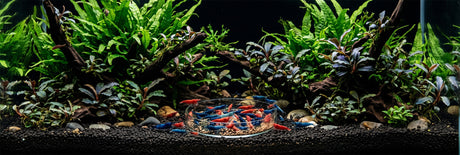
He is small, brave, and an absolute eye-catcher: The Cambarelluspatzcuarensis, better known by its abbreviation CPO. This dwarf crayfish has taken the aquarium world by storm, as it is one of the few species that provides plenty of action even in smaller tanks without destroying plant life.
In this post, you'll learn all about its home in Mexico, its various color forms, and how to keep it healthy and vital with the right snacks from GlasGarten.
Its Home: A Highland Lake in Mexico
The original Cambarelluspatzcuarensis comes from a very specific region: Lake Pátzcuaro in the Mexican state of Michoacán. This lake is located at an altitude of over 2,000 meters, meaning the animals are adapted to relatively cool temperatures and oxygen-rich water.
In its wild form, the crayfish is rather inconspicuous, marbled grayish-brown or olive – perfect camouflage on muddy ground.
Color Splendor: From Chocolate to Bright Orange
Through selective breeding, various color variants are now established in the hobby:
- CPO (Orange): By far the most popular form. The vibrant orange is a mutation that would have little chance of survival in nature but is an absolute star in the aquarium.
- Chocolate Dwarf Crayfish: A dark brown, very elegant-looking variant, often with slightly stronger markings.
- Wild-type: The natural, brownish-striped form, especially appreciated by enthusiasts of natural biotope aquariums.
Care: What does a CPO need to be happy?
Dwarf crayfish are strong-willed loners but can be kept in groups without problems in well-structured tanks.
- Tank Size: A pair or a small group (1 male, 2 females) can be well cared for in aquariums as small as 54 liters.
- Structure is everything: Crayfish are territorial and sometimes aggressive. Use roots, stones, and especially crayfish caves, such as our ShrimpPuddle Caves and Tubes. The more hiding places there are, the more peaceful the coexistence.
- Water parameters: CPOs prefer medium to hard water with a pH value between 7.0 and 8.5. The temperature should ideally be between 18 °C and 24 °C – heaters are often not even necessary.
Nutrition: Minerals for a strong shell
As omnivores, CPOs are not picky but require a nutrient-rich diet to avoid molting problems. Since they completely renew their shell with each growth spurt, the intake of minerals is vital.
Our feeding recommendation:
- GlasGarten Shrimp Dinner 2: Even though the name says "Shrimp," this food is excellent for dwarf crayfish due to its composition. It sinks quickly and offers a balanced mixture of animal and plant proteins.
- Mineral Junkie Bites: An absolute must for crayfish keepers! These bites provide the animals with highly concentrated minerals. A strong shell is the best insurance against infections and injuries after molting.
- Leaves: As in their natural habitat, there should always be brown autumn leaves (oak, beech, or catappa) in the tank. They serve as a continuous food source and natural hiding place.
Behavior and Socialization
CPOs are more peaceful than their larger relatives but are still little daredevils.
- With shrimp: Coexistence is usually possible, but it can happen that a careless shrimp baby is caught. In densely planted tanks with lots of moss, cohabitation usually works very well.
- With fish: Bottom-dwelling fish (like corydoras) should be avoided, as territorial disputes can arise. Fish for the upper tank zone, however, are not a problem.
Conclusion: Action in the Nano Tank
The Cambarelluspatzcuarensis is the perfect inhabitant for anyone looking for an animal with real character. With its vibrant orange appearance and interesting social behavior, it enriches any aquarium. Ensure plenty of caves and a mineral-rich diet – then you will enjoy these Mexican dwarfs for a long time.